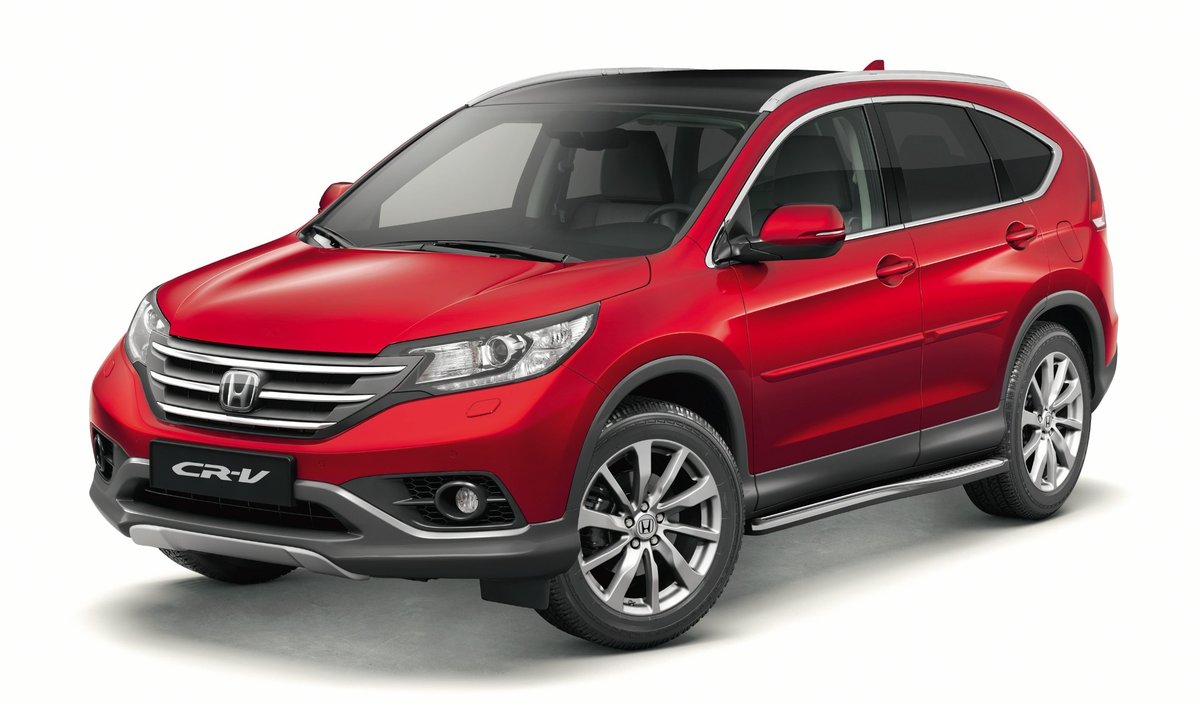
When it comes to the compact SUV segment, few names resonate with the same blend of reliability, practicality, and thoughtful engineering as the Honda CR-V. For many drivers, the sweet spot of this evolution lies within the Third & Fourth Generation Honda CR-V (2007-2016): Design & Tech Evolution. These two generations didn't just iterate on their predecessors; they redefined what a family-friendly crossover could be, introducing design philosophies and technological advancements that set new benchmarks for the industry.
Whether you're a long-time CR-V enthusiast, a prospective buyer, or simply curious about the journey of one of America's best-loved vehicles, understanding these pivotal generations is key. We'll explore how Honda refined its winning formula, balancing form and function with a steady eye on the future.
At a Glance: Your CR-V Journey Awaits
- Third Generation (2007-2011): A complete redesign with a more car-like stance, a convenient rear liftgate, and initial steps into integrated navigation and advanced safety features.
- Facelift (2010 Model Year): Refined aesthetics, a bump in horsepower, and crucial tech additions like USB audio input.
- Fourth Generation (2012-2016): Built on the 3rd Gen's success, this era focused on smarter cabin tech with standard features like SMS text messaging, Pandora radio, and a rearview camera.
- Core Strengths: Across both generations, the CR-V maintained its reputation for spacious interiors, fuel efficiency, and Honda's hallmark reliability.
- Why They Matter: These models offered a compelling package of versatility and evolving technology, making them highly sought-after in the used car market today.
A Legacy of Practicality: Setting the Stage
The Honda CR-V didn't just appear out of nowhere; it built its reputation brick by brick. From its debut in 1997, it quickly established itself as a go-to choice for those needing more space and utility than a sedan, but without the bulk of a traditional SUV. The 1st and 2nd generations laid the groundwork with their compact footprint, generous cargo capacity, and car-like driving dynamics.
By the mid-2000s, the compact SUV market was booming, and consumer expectations were rising. People wanted more than just a utilitarian box; they craved style, comfort, and integrated technology. This shifting landscape perfectly positioned Honda for a bold move with its third-generation CR-V, signaling a significant departure from its more rugged ancestors and setting the stage for even more refinement in the fourth.
The Third Generation (2007-2011): Reshaping the Compact SUV
Launched in 2006 for the 2007 model year, the third-generation CR-V wasn't just an update; it was a revolution. Honda threw out the rulebook, opting for a design that was decidedly more modern, sleek, and urban-focused, moving away from the more traditional SUV look.
A Bold New Stance: Design Rethink
The most striking change was the exterior. Gone was the side-opening rear door and externally mounted spare tire, replaced by a more conventional and practical rear liftgate and the spare tire cleverly tucked away under the rear cargo area. This simple change alone dramatically improved usability, especially in tight parking spaces.
Dimensionally, the 3rd Gen CR-V was a smart exercise in optimization. It became lower, wider, and shorter than previous models, benefiting from a lower center of gravity. This gave it a more planted, car-like feel on the road, improving handling and ride comfort while still retaining its commanding view. Inside, versatility was enhanced with the introduction of a center rear seat pass-through, making it easier to carry longer items while still accommodating rear passengers. Honda's goal was clear: create a vehicle that looked sophisticated on city streets and felt nimble behind the wheel, without sacrificing its core utility.
Under the Hood: Powering Your Adventures
For North American markets, the 3rd Gen CR-V relied on Honda's venerable K-series 2.4 L inline-four engine. Initially rated at a robust 166 hp (124 kW) at 5,800 rpm and 161 lb⋅ft (218 N⋅m) at 4,200 rpm, this engine was paired with a smooth 5-speed automatic transmission. It offered a good balance of power for daily driving and reasonable fuel efficiency, with EPA estimates around 20 mpg city and 26 mpg highway for the pre-facelift models.
Globally, Honda offered different powertrain options, including a 2.2 L i-CTDI diesel engine in Europe and Asia, and a new R20A 2.0 L petrol engine (i-VTEC SOHC) for the European market, replacing the K20A. These variations highlighted Honda's global engineering prowess, tailoring the CR-V to diverse market demands.
Stepping Up the Tech Game: Convenience and Connectivity
The 3rd generation brought the CR-V firmly into the era of integrated technology. While previous generations offered basic audio, the EX-L trim introduced a host of advanced features:
- Integrated Navigation: An Alpine-sourced DVD-based system with voice control made finding your way easier than ever.
- Enhanced Audio: XM radio (US/Canada), an in-dash CD player with MP3/WMA compatibility, and an optional six-disc CD changer catered to diverse music preferences.
- Early Connectivity: A PC Card slot offered a glimpse into future media integration, and critically, all models retained an auxiliary audio input jack, allowing for connection of external music players – a groundbreaking feature for its time.
- Rear Backup Camera: A crucial safety and convenience feature, helping drivers navigate tight spots with greater confidence.
These advancements weren't just about bells and whistles; they were about making the CR-V a more user-friendly and enjoyable vehicle for everyday life.
Safety First: Protecting What Matters
Honda has always prioritized safety, and the 3rd Gen CR-V was no exception. It came standard with Vehicle Stability Assist (VSA), a crucial electronic stability control system designed to help drivers maintain control during challenging driving conditions.
Independent safety ratings underscored its commitment to protection. The IIHS rated the CR-V "good" in both frontal and side-impact crash tests. While its roof strength rating was "marginal" by later, more stringent standards, an IIHS analysis in June 2011 notably found the 2007-08 model year CR-V had the lowest fatality rate in its class, a testament to its real-world crash performance.
The Mid-Cycle Refresh (2010 Model Year): Refining a Winner
For the 2010 model year, Honda introduced a significant facelift that refined the 3rd generation CR-V's winning formula.
- Exterior Tweaks: The front fascia received a redesign with a new grille and bumper, lending a fresher, more assertive look. Revised taillights and a subtly redesigned rear bumper, along with new 17-inch alloy wheels for EX and EX-L trims, kept the CR-V looking contemporary.
- Interior Enhancements: Inside, new seat fabrics, wider armrests, and altered audio controls improved comfort and ergonomics. The gauge cluster received a cool blue backlighting, adding a touch of modern sophistication.
- Tech Upgrades: Connectivity took another step forward. A USB audio input became standard in EX-L models, making it easier to integrate portable media devices. Hands-free Bluetooth was now exclusive to EX-L trims equipped with navigation. In 2011, a mid-level SE trim was introduced, bridging the gap with features like a 6-disc CD changer.
- Powertrain Bump: Honda engineers tweaked the 2.4L K-series engine, boosting power from 166 hp to a more spirited 180 hp (134 kW). This came without a significant penalty to fuel economy; in fact, EPA estimates improved slightly to 21 mpg city / 28 mpg highway for FWD models and 21 mpg city / 27 mpg highway for AWD. This improved efficiency was also aided by a change in recommended oil weight to 0W-20 for the updated K24Z6 engine.
The 3rd generation CR-V, particularly after its facelift, became a market leader, claiming the spot as the best-selling SUV in the US in 2007 and 2008, surpassing even the long-dominant Ford Explorer. Its widespread popularity led to increased production, solidifying its place as a cornerstone of Honda's lineup.
The Fourth Generation (2012-2016): Intelligent Evolution
Following the massive success of its predecessor, the 4th generation Honda CR-V, launched for the 2012 model year, faced high expectations. Rather than another revolutionary overhaul, Honda opted for a more intelligent, evolutionary approach, focusing on enhancing comfort, efficiency, and – crucially – connectivity.
Sleek Lines, Smart Spaces: Evolving Design
While the 4th generation carried over some design cues, it presented a more chiseled and aerodynamic profile. The styling became even more refined, with a cleaner grille and headlight design, and a more pronounced rear D-pillar. The overall aim was to project a sense of sophistication and efficiency.
Interior design continued Honda's focus on smart packaging. The cabin felt slightly more upmarket, with improved materials and a more ergonomic layout. The magic of Honda's "man maximum, machine minimum" philosophy was evident, maximizing passenger and cargo space within the compact exterior dimensions. The rear seats could still fold flat with impressive ease, providing substantial cargo room for everything from groceries to camping gear.
Smart Features for a Connected Life: Tech Takes the Lead
Where the 3rd Gen dipped its toes into advanced tech, the 4th Gen dove headfirst, making many features standard that were previously optional or unavailable. This generation truly embraced the smartphone era:
- Standard Rearview Camera: A crucial safety and convenience feature became standard across all trims, providing invaluable assistance for parking and backing up.
- SMS Text Messaging Capability: For the first time, drivers could read and respond to text messages (using pre-set responses) via the vehicle's display, enhancing connectivity while minimizing driver distraction.
- Pandora Internet Radio: Integrated directly into the infotainment system, allowing drivers to stream their favorite personalized radio stations through their paired smartphone.
- Full-Color Multi-Information Display (i-MID): This central screen provided vital vehicle information, audio data, and turn-by-turn directions (with navigation), all easily controlled via steering wheel buttons.
- HondaLink: Later models within this generation also began integrating the HondaLink system, offering cloud-based services for connectivity, entertainment, and even emergency assistance, further blurring the lines between vehicle and digital ecosystem.
These additions weren't just incremental; they were about making the driving experience more intuitive and integrated with our increasingly connected lives. You could genuinely feel Honda designing with the modern driver in mind.
Engine & Efficiency: The Heart of the CR-V
The 4th generation continued to rely on a refined version of Honda's 2.4L i-VTEC four-cylinder engine, paired with a 5-speed automatic transmission (early models). This engine continued its reputation for strong reliability and good fuel economy. In 2015, as part of a mid-cycle refresh, Honda introduced a new EarthDreams Technology 2.4-liter engine with direct injection and a new Continuously Variable Transmission (CVT). This combination significantly boosted fuel economy, pushing it even higher and making the CR-V one of the most efficient vehicles in its class, without sacrificing power. This was a critical update, showing Honda's commitment to efficiency without compromising the driving experience.
Safety Continued: An Unwavering Commitment
Safety remained a top priority. The 4th generation CR-V continued to earn top safety ratings from both the IIHS and NHTSA. It introduced more advanced safety features, even if not standard across all trims, such as:
- Forward Collision Warning (FCW): Alerting drivers to potential frontal impacts.
- Lane Departure Warning (LDW): Notifying drivers if they inadvertently drift out of their lane.
These features, though basic by today's standards, were important steps towards the advanced driver-assistance systems that would become commonplace in future generations, reflecting Honda's steady evolution in vehicle safety.
Comparing the Generations: 3rd vs. 4th Gen CR-V
Deciding between a 3rd and 4th generation CR-V often comes down to budget, specific feature desires, and subtle driving dynamics.
- Design & Aesthetics: The 3rd Gen (especially post-facelift) offers a timeless, slightly more conventional SUV look. The 4th Gen is sleeker, more aerodynamic, and perhaps a touch more modern.
- Interior Feel: Both offer excellent practicality. The 4th Gen tends to have slightly nicer materials and a more integrated, less button-heavy dash design, particularly after its own mid-cycle refresh.
- Technology & Connectivity: This is arguably the biggest differentiator. If features like standard rearview camera, SMS capability, and Pandora integration are high priorities, the 4th Gen is a clear winner. The 3rd Gen offered navigation and auxiliary input, but it feels more "of its time."
- Driving Experience: Both offer a comfortable, car-like ride. The 3rd Gen with its 5-speed automatic is solid and reliable. The 4th Gen, particularly with the EarthDreams engine and CVT (2015+ models), offers noticeably better fuel economy and a smoother, if less engaging, power delivery.
- Safety Features: Both are safe vehicles, but the 4th Gen started introducing more active safety aids like FCW and LDW on higher trims.
- Price Point: Naturally, 3rd Gen models will typically be more affordable, making them an excellent value proposition for those who prioritize reliability and basic utility over cutting-edge tech.
For drivers prioritizing the latest in standard connectivity and fuel efficiency, a 4th Gen CR-V, especially a post-2015 model with the CVT, will likely appeal more. If you're seeking robust reliability and ample space at a lower entry price, a well-maintained 3rd Gen (2010-2011 facelift models are particularly strong) remains an excellent choice. To dive deeper into how these models fit into the broader narrative, you can Explore Honda CRV generations.
Owning a Third or Fourth Gen CR-V Today: What You Need to Know
Purchasing a used CR-V from these generations means buying into Honda's reputation for longevity and relatively low maintenance costs. However, like any used vehicle, there are considerations.
- Maintenance: Routine oil changes (using the correct oil weight, especially for 2010+ 3rd Gen and 4th Gen models), transmission fluid checks, and brake service are key. The 2.4L K-series engine is generally robust, but vigilance with oil levels and changes will prevent issues.
- Known Issues: Both generations are largely reliable, but some common complaints can include AC compressor issues (more common in 3rd Gen), door lock actuator failures, and occasional minor electrical gremlins with aging infotainment systems. The 4th Gen's CVT, while efficient, requires specific fluid and proper maintenance.
- Rust: Depending on your region, check for rust on the undercarriage, brake lines, and suspension components, particularly on older 3rd Gen models.
- Resale Value: CR-Vs from these generations hold their value remarkably well, a testament to their enduring appeal and reliability. This means you might pay a bit more upfront, but you'll likely recoup more if you decide to sell later.
- Inspecting a Used Model: Always opt for a pre-purchase inspection by a trusted mechanic. Check the service history, look for signs of accident damage, and test all electronics. Pay close attention to how the engine sounds and how the transmission shifts (smoothly, without hesitation or clunking).
By doing your homework and choosing a well-maintained example, you can enjoy years of reliable service from either of these impressive CR-V generations.
The CR-V's Enduring Appeal: A Forward Look
The Third and Fourth Generation Honda CR-V (2007-2016) represent a fascinating and highly successful chapter in the compact SUV's story. They demonstrated Honda's ability to adapt, innovate, and consistently deliver vehicles that meet the evolving needs of families and individuals alike. From the 3rd Gen's revolutionary design and initial foray into integrated tech to the 4th Gen's commitment to seamless connectivity and refined efficiency, these models laid a robust foundation for the CR-V's continued dominance.
Their legacy is clear: a versatile, reliable, and intelligently designed crossover that continues to be a smart choice on the used market. If you're seeking a vehicle that expertly balances practicality with progressive features, these CR-V generations are well worth your consideration. They offer a compelling blend of everything that makes a Honda, well, a Honda – proving that thoughtful evolution can indeed create timeless appeal.