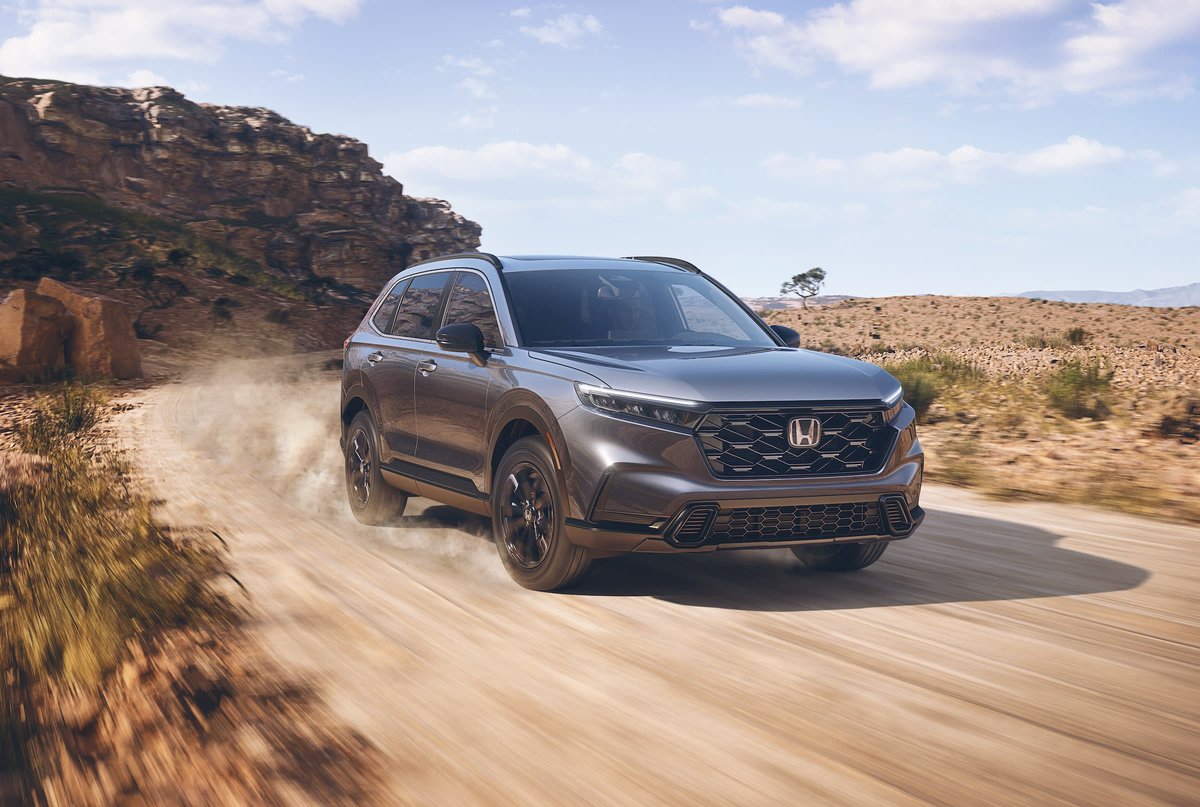
The Honda CR-V has long been a staple on American roads, celebrated for its practical size, fuel efficiency, and a reputation for steadfast reliability. But like any long-running model, not all CR-Vs are created equal. Dive into the world of Reliability, Common Problems & Resale Value Across CR-V Generations, and you'll quickly discover a nuanced landscape. While many CR-Vs live up to the Honda nameplate, some model years have proven to be more problematic than others, directly impacting their long-term dependability and, subsequently, their value in the used car market.
For anyone considering a used CR-V, understanding these generational quirks isn't just smart—it's essential for making a confident purchase. Let's break down which models shine, which ones stumble, and what to look out for.
At a Glance: CR-V Reliability Highlights
- Generally Reliable: Honda CR-V largely maintains a strong reputation for durability.
- Years to Approach with Caution: 1997-1999, 2002-2004, 2007-2010, 2011, 2015, and 2017-2019 are often cited for significant issues.
- Common Headaches: Engine troubles (oil dilution, overheating), electrical failures, transmission slips, AC compressor issues, Takata airbag recalls, severe rear subframe corrosion (certain years), and complex safety system malfunctions (CMBS).
- Sweet Spot Years: Models from 2005, 2006, 2012-2014, 2016, 2019, 2020, and 2021 typically show fewer reported issues.
- Strong Resale Value: Even with some problematic years, CR-Vs generally hold their value well, especially the more reliable ones.
The Nuance of Reliability: Not All CR-Vs Are Created Equal
The Honda CR-V’s journey began in the late 90s, evolving through multiple generations, each bringing new designs, technologies, and, inevitably, a unique set of challenges. Understanding these shifts is key to discerning a reliable daily driver from a potential money pit. We've taken a deep dive through each generation to highlight the years that either lived up to the Honda hype or fell short. To truly appreciate this evolution, it's helpful to Explore Honda CRV generations and see how design and engineering philosophies have changed.
Generational Deep Dive: The Good, The Bad, and The Costly
Let's dissect the CR-V's history by generation, focusing on the specific problems that have plagued certain model years.
First Generation (1997-2001): The Trailblazer's Early Stumbles
The original CR-V was a pioneer, blending car-like comfort with SUV utility. While generally simple and robust, its early years weren't without growing pains.
- 1997-1999: Higher Complaint Rates: These early models, despite their simplicity, saw a notable number of owner complaints.
- 1997 (2 Recalls, 109 Complaints): Owners often reported sudden engine stalls or electrical cut-outs, frequently traced back to a faulty ignition switch. Airbag warning lights (SRS) were also common, often due to the larger Takata airbag recall issues with delayed parts availability.
- 1998 (3 Recalls, 143 Complaints): Electrical issues persisted, mirroring 1997. More concerning were reports of serious transmission failures, with vehicles slipping into neutral unexpectedly at highway speeds (60-70 MPH), posing significant safety risks. Blown electrical fuses affecting headlights and shifter operation were also reported.
- 1999 (3 Recalls, 138 Complaints): Engine performance issues emerged, including valve damage and low compression in cylinder #4, potentially linked to incorrect maintenance schedules printed by Honda. AC system failures and safety concerns with original Bridgestone Dueler tire tread separation also plagued this year.
Second Generation (2002-2006): Utility Meets Unexpected Headaches
Honda redesigned the CR-V for its second generation, enhancing its utility but introducing new electrical, airbag, and cooling system concerns in its initial years.
- 2002 (16 Recalls, 526 Complaints): This year was notorious for significant airbag defects, with eight recalls tied to the widespread Takata issue, including exploding inflators and scarce replacement parts. Electrical problems were rife, notably power window switches smoking or catching fire, which often weren't covered by recalls. Other failures included headlights and turn signal switches.
- 2003 (14 Recalls, 491 Complaints): Many issues from 2002 carried over, including airbag concerns and burning window switches. New problems arose: engine overheating (due to radiator fan or thermostat issues), heater core leaks, and even engine fires stemming from the AC compressor. The AC system itself was a major pain point, with compressors failing explosively, leading to repair costs upwards of $2,500. Sudden unintended acceleration and unresponsive brakes were also reported, highlighting vehicle control issues.
- 2004: The persistent AC compressor failure was a major issue, frequently leading to loud noises, poor airflow, and only hot air from the vents.
- 2005-2006: Second-Gen Sweet Spot: These later models largely ironed out the earlier generation's electrical and AC woes, emerging as some of the more reliable CR-V options within their era. If you're looking for a dependable second-gen model, 2005 and 2006 are often highly recommended.
Third Generation (2007-2011): Growing Pains and Structural Worries
The third generation brought a more refined ride and increased interior space but unfortunately faced significant reliability and safety challenges, particularly in its earlier years.
- 2007 (12 Recalls, 877 Complaints): Airbag problems continued. Electrical components were prone to fires, and door locks often malfunctioned. Most alarming was a severe structural risk: rear subframe corrosion (NHTSA Recall No. 23V228000). In extreme cases, this corrosion could render the vehicle "unrepairable," causing rear wheels to collapse or axles to detach while driving.
- 2008 (11 Recalls, 954 Complaints): Airbag and electrical issues persisted. Adding to the list were steering and suspension failures, including power steering fluid leaks, rack and pinion failures, steering lock-ups, and broken control arms due to corrosion. Door actuators and exploding AC compressors also remained common problems.
- 2009 (12 Recalls, 383 Complaints): While some mechanical and structural issues saw improvements, airbag concerns remained paramount. A staggering 10 of the 12 recalls for this year were related to airbag failures, improper deployment, or inflator explosions.
- 2010: Steering issues and AC clutch failures were reported. Problems with the variable timing control (VTC) system also emerged, causing engine noise and impacting overall performance.
- 2011: Ending the Generation on a Stronger Note: While not entirely free of issues, the 2011 model year generally showed improved reliability compared to its predecessors in this generation.
Fourth Generation (2012-2016): A Step Forward, Then a Misstep
This generation saw Honda refining the CR-V's formula, but early and late models of this production cycle had their share of reported problems.
- 2011: (Often grouped with Gen 3 issues due to overlap, but officially the first year of Gen 4, facing typical new-gen teething problems).
- 2015: This year experienced issues with the Collision Mitigation Braking System (CMBS), where the automatic braking would activate unexpectedly. Oil dilution, particularly concerning in colder climates, and excessive vibrations at idle were also frequently reported.
- 2023 Update: The 2015 model was specifically called out in a class-action lawsuit for excessive vibrations.
- 2012-2014 & 2016: The Fourth-Gen Successes: These years are largely regarded as reliable, avoiding the specific issues that plagued the 2011 (teething) and 2015 (CMBS, oil dilution) models. The 2016 model, in particular, stands out as one of the most reliable modern CR-Vs with very few complaints.
Fifth Generation (2017-2022): Turbo Troubles and Tech Teething
The fifth generation introduced a new 1.5L turbocharged engine, aiming for improved fuel economy and performance. However, this engine, along with advanced safety features, brought a new wave of severe mechanical, electrical, and safety defects, particularly in its early years.
- 2017 (6 Recalls, 1,605 Complaints): The debut of the 1.5L turbocharged engine was problematic. Owners reported severe issues like premature head gasket failure, turbocharger malfunction, and catastrophic fuel injector problems often leading to the vehicle entering "limp mode" on the highway. Electrical complaints included dashboard warning lights, and malfunctioning ABS, traction control, and adaptive cruise control. Brake pedal failures and spontaneous activation of the Collision Mitigation Braking System (CMBS) were also common.
- 2018 (4 Recalls, 1,855 Complaints): The issues from 2017 persisted, with continued reports of limp mode, loss of power, and expensive fuel injector failures. Steering problems like "sticky steering" at high speeds were also prominent. Engine misfires, erratic electronic systems, stalling, turbocharger failures, and unresponsive steering were frequently reported. The unpredictable CMBS continued to be a safety concern.
- 2019 (7 Recalls, 930 Complaints): While some improvements were made, recurring fuel injector problems were still linked to the malfunction of safety features like adaptive cruise control, lane keep assist, traction control, and ABS. Sudden power loss, limp mode, and stalling continued. Unexpected CMBS activation remained a hazard. Steering defects, including sticky steering and damaged electronic power steering (EPS) racks, often led to repair costs exceeding $5,000.
- 2019, 2020, & 2021: Turning the Corner (Later Fifth Gen): Honda made significant efforts to address the oil dilution and fuel injection issues in later 5th generation models. By 2019, and especially in 2020 and 2021, these problems saw a marked reduction. The 2021 model, in particular, received a 5-star safety rating from NHTSA, making it a strong choice.
Sixth Generation (2023-Present): Modern Era's Promise
The newest iteration of the CR-V, launched in 2023, boasts updated styling, enhanced technology, and refined powertrains. While it's still relatively new to fully assess long-term reliability trends, initial reports are generally positive, building on the improvements seen in the later 5th gen models. Early indications suggest Honda has learned from past issues, focusing on a robust user experience from the outset.
Common Pitfalls Across the CR-V Lineup: What to Watch For
Beyond generation-specific woes, some problems have a way of reappearing or affecting multiple CR-V models, demanding extra vigilance.
- Engine Problems:
- Oil Dilution: A significant issue, particularly with the 1.5L turbocharged engine (2017-2019), where gasoline mixes with engine oil, degrading lubrication and potentially causing premature wear.
- Overheating: Often linked to faulty radiator fans, thermostats, or heater core leaks (2002-2003).
- Misfires: Can lead to cylinder head damage and reduced engine performance.
- Electrical Fires and Dashboard Failures: Burning power window switches, smoking turn signal switches, and complete dashboard blackouts have been reported across generations (e.g., 2002-2003, 2007-2009).
- Transmission Slip and Failure: Early models (1998-2003) had issues with transmissions slipping into neutral. More recent CVT (Continuously Variable Transmission) models have seen complaints of rough shifting, banging noises, and costly transmission repairs.
- AC System Catastrophes: AC compressor failures are a recurring nightmare (2003, 2008), often contaminating the entire system and leading to expensive repairs well over $2,000.
- Dangerous Airbag Malfunctions: The widespread Takata airbag recalls affected many CR-V years (2002-2019), involving airbags that either didn't deploy, deployed improperly, or whose inflators exploded, showering occupants with metal fragments.
- Frame Rust and Rear Suspension Collapse: A severe safety concern for certain third-generation models (2007-2009). Extensive rear subframe corrosion could lead to axle detachment or the sudden collapse of a rear wheel. This is a critical inspection point for these years.
- Fuel Injector Issues: Common in early 5th generation models (2017-2019) with the 1.5L turbocharged engine, leading to sudden power loss, limp mode, and expensive repairs.
- Automatic Braking System (CMBS) Glitches: The Collision Mitigation Braking System, especially in 2017-2019 models, has been known to trigger sudden, unnecessary braking without any obstacle present, often due to software errors.
- Door Actuator Problems: Causing issues with locking and unlocking doors, sometimes leading to doors not locking at all or locking themselves unexpectedly.
Understanding Resale Value: A Honda Stronghold (Mostly)
Despite some rough patches, the Honda CR-V generally enjoys a robust resale value. This is largely due to Honda's overall reputation for reliability, fuel efficiency, and a comfortable, practical driving experience. Well-maintained CR-Vs, especially those from the more reliable model years, hold their value exceptionally well.
However, problematic model years can see a dip. A CR-V known for engine issues or major recalls will naturally command a lower price and be harder to sell unless it comes with documented proof of repairs. Buyers are increasingly savvy, researching common problems before making a purchase. Therefore, choosing a CR-V from a "best year" list not only ensures better reliability for you but also protects your investment down the line.
The Sweet Spot: Best Honda CR-V Years to Consider Buying Used
If you're in the market for a used CR-V, these model years offer the best balance of reliability, features, and value:
- 2005 (Second Generation): Most of the earlier generation's AC and electrical issues were resolved by this model year, offering a dependable, no-frills SUV.
- 2006 (Second Generation): Often cited as one of the most reliable CR-V models ever produced, with minimal engine or door actuator problems reported.
- 2012-2014 (Fourth Generation): These years are generally considered very reliable, steering clear of the issues found in the 2011 and 2015 models of this generation.
- 2016 (Fourth Generation): Stands out as one of the modern CR-V models with the fewest owner complaints, making it an excellent used buy.
- 2019, 2020 (Fifth Generation): Honda significantly mitigated the oil dilution and fuel injection problems in these later 5th-gen models. They offer a more modern experience with improved reliability compared to their earlier counterparts.
- 2021 (Fifth Generation): Received a 5-star safety rating from NHTSA and continued to build on the reliability improvements of the late 5th generation, making it a very strong choice for a newer used CR-V.
Before You Buy: Essential Checks for Any Used CR-V
No matter how good a year is supposed to be, every used car is an individual. Here’s how to protect yourself:
- Vehicle History Report: Always get a CarFax or AutoCheck report. Look for accidents, service history, and consistent mileage readings. This is your first line of defense against hidden issues.
- Recall Check: Use the NHTSA website with the VIN to check for any open recalls, especially for airbags, brakes, or structural issues. Ensure these have been addressed.
- Pre-Purchase Inspection (PPI): This is non-negotiable. Have a trusted independent mechanic—ideally one familiar with Hondas—inspect the vehicle thoroughly. They can spot hidden rust (especially subframe corrosion on 2007-2009 models), check engine health (e.g., for oil dilution or misfires), inspect the AC system, and assess transmission condition.
- Test Drive: Pay close attention to how the car drives. Listen for unusual noises (engine, transmission, AC compressor), feel for vibrations (especially at idle for 2015 models), and check for smooth shifting. Test all electrical components, including power windows and dashboard lights.
- Check for Warning Lights: Make sure the "Check Engine," "SRS" (airbag), "ABS," and "CMBS" lights are not on during the test drive after startup.
Your Next Move: Navigating the CR-V Market with Confidence
The Honda CR-V remains a highly popular compact SUV for good reason. Its blend of practicality, comfort, and generally strong reliability makes it an attractive option for many drivers. However, as with any vehicle that spans multiple generations, its history is a mixed bag.
By understanding the specific reliability trends, common problems, and the best-performing model years, you're now equipped to approach the used CR-V market with a journalist's eye for detail and an expert's discernment. Avoid the problematic years, seek out the proven performers, and always, always conduct thorough inspections. With this knowledge in hand, you’re well on your way to finding a Honda CR-V that truly lives up to its reliable reputation and serves you well for years to come.