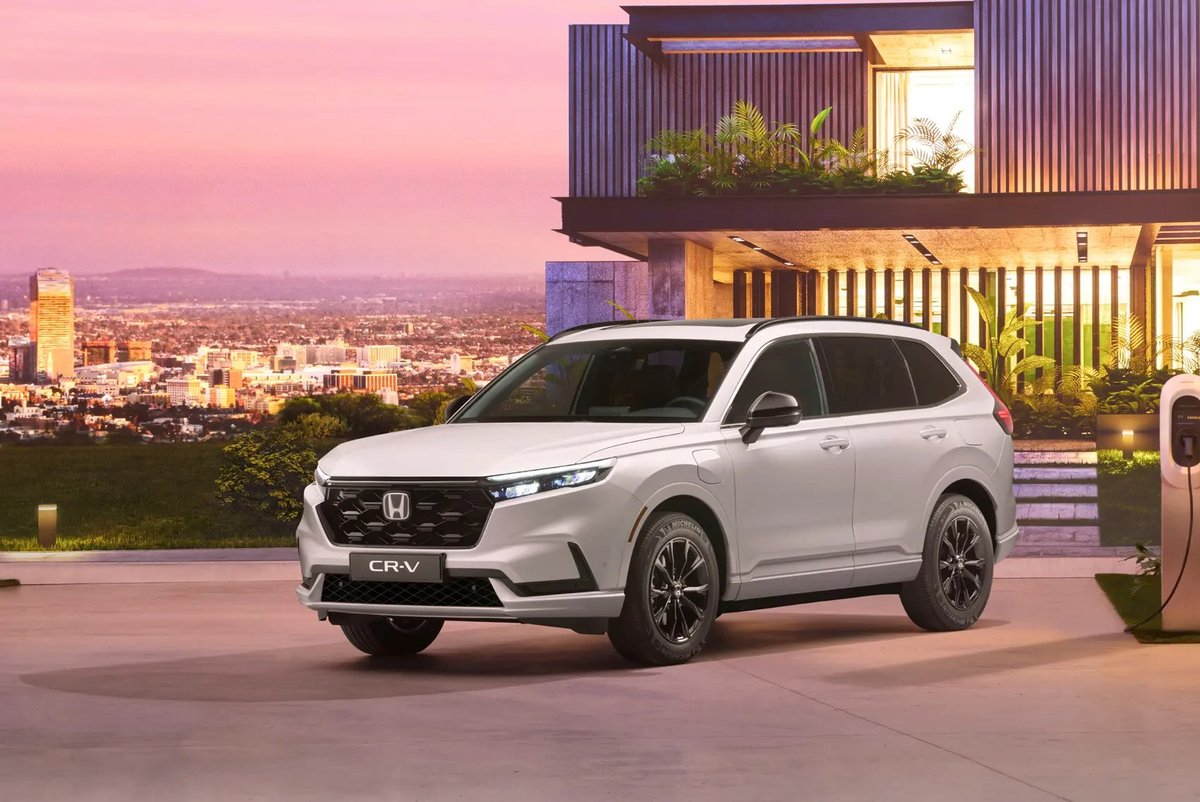
The compact SUV market is a fiercely competitive arena, and for years, one name has consistently stood out: the Honda CR-V. While every generation brings its own set of improvements, the Fifth Generation Honda CR-V (2017-2022) marked a particularly pivotal moment. This era didn't just refine an already successful formula; it redefined what a CR-V could be, most notably with the introduction of its first-ever hybrid powertrain and a suite of modern features that elevated it from a practical choice to a truly sophisticated family companion.
This wasn't merely an update; it was an evolution that solidified the CR-V's reputation for reliability, versatility, and now, cutting-edge efficiency and technology.
At a Glance: Key Takeaways from the Fifth-Gen CR-V
- Hybrid Power Arrives: The 5th generation introduced Honda's innovative i-MMD hybrid system, offering a significant leap in fuel efficiency and performance.
- Turbocharged Performance: For the first time, a turbocharged 1.5-liter engine became a standard option, providing spirited acceleration with impressive economy.
- Advanced Safety Standard: Honda Sensing® became standard on most trims, bringing adaptive cruise control, lane-keeping assist, and collision mitigation braking to a wider audience.
- Smarter Connectivity: A 7-inch touchscreen infotainment system with Apple CarPlay and Android Auto made smartphone integration seamless.
- Refined Ride & Space: Based on a robust new platform, it offered improved handling, a quieter cabin, and generous passenger and cargo space.
- Global Versatility: Available in 5-seater and 7-seater configurations in various markets, catering to diverse family needs worldwide.
A New Foundation: The Fifth-Gen's Grand Entrance
When Honda unveiled the fifth-generation CR-V in late 2016 for the 2017 model year, it was clear they weren't just tinkering around the edges. This was a ground-up redesign, built on Honda's Compact Car Architecture (CCA) platform, shared with the acclaimed tenth-generation Civic and Accord. This architectural shift immediately brought benefits: improved rigidity, better handling, and a more refined ride quality that felt a step above its predecessor.
Sales kicked off in the U.S. in December 2016, with North American production starting in Ohio and Indiana. Globally, the CR-V rolled out to eager markets like Thailand, Indonesia, and Malaysia in 2017, eventually making its return to Japan in 2018 after a hiatus, and hitting European shores the same year, even offering a seven-seat variant in some regions to further expand its family appeal.
The design itself was a bolder, more sculpted affair than the outgoing model. It shed some of its conservative lines for a more assertive stance, featuring redesigned headlights (often with LED accents), a more prominent grille, and a sportier profile. It was unmistakably a CR-V, but one that had clearly hit the gym.
Under the Hood: Power and the Dawn of Electrification
One of the most talked-about aspects of the fifth-generation CR-V was its powertrain lineup, which saw significant innovation and a clear shift towards modern efficiency.
The Turbocharged Revolution
For the first time in CR-V history, a turbocharged engine made its debut. The 1.5-liter turbocharged I4, pushing out a healthy 190 hp (142 kW; 193 PS), quickly became the star of the show. This engine, paired exclusively with a continuously variable transmission (CVT) in North America, offered a compelling blend of power, smoothness, and fuel efficiency. It provided brisk acceleration for highway merging and city driving, all while maintaining excellent gas mileage. This engine became standard on all trims for the 2020 model year in the U.S. and Canada, signifying Honda's confidence in its new direction.
Initially, some entry-level trims (like the LX in North America) also offered an Earth Dreams 2.4-liter I4 engine, delivering 184 hp (137 kW; 187 PS). While a proven and reliable workhorse, its naturally aspirated nature meant it couldn't quite match the turbo's torque delivery or efficiency. Consequently, this engine was dropped from the lineup for 2020 in North America.
The Diesel Alternative (Outside North America)
In certain international markets, particularly in Europe and parts of Asia, Honda continued to offer a 1.6-liter Honda i-DTEC turbo-diesel engine. This option provided robust torque and exceptional fuel economy, rated at 160 hp (119 kW; 162 PS). What set this diesel apart was its pairing with a sophisticated ZF 9HP 9-speed automatic transmission and a revised dual-turbocharger setup, catering to drivers who prioritized long-distance efficiency and strong pulling power.
The Hybrid Breakthrough: Fueling a Greener Future
Perhaps the most significant powertrain development for the fifth-generation CR-V was the introduction of a hybrid variant. Honda had been a pioneer in hybrid technology, and bringing it to their best-selling SUV was a natural, yet highly anticipated, move.
The CR-V Hybrid first made its appearance in China in April 2017, followed by a European launch in early 2019. North American markets (excluding Canada) had to wait a little longer, with the hybrid model unveiled as part of the 2020 model year refresh.
This hybrid system utilized a 2.0-liter Atkinson-cycle four-cylinder petrol engine paired with Honda's innovative i-MMD (intelligent Multi-Mode Drive) hybrid system, delivering a combined output of 158 kW (212 hp / 215 PS). This system intelligently switches between three drive modes—EV Drive, Hybrid Drive, and Engine Drive—to optimize efficiency and performance. In practice, this meant smooth, silent electric-only operation at low speeds, a blend of electric and gasoline power for acceleration, and direct engine power for highway cruising. The result was a dramatic improvement in fuel economy without sacrificing the CR-V's characteristic reliability or cargo space.
A Command Center of Comfort and Connection
Beyond the mechanical advancements, the fifth-generation CR-V also brought a significant upgrade in interior design, technology, and overall occupant experience. Honda aimed to make the cabin a more inviting, intuitive, and connected space.
Tech at Your Fingertips
The centerpiece of the interior tech was a standard 7-inch touchscreen infotainment system. This wasn't just any touchscreen; it finally brought essential modern connectivity to the CR-V with Apple CarPlay and Android Auto integration. This meant drivers could seamlessly access navigation, music, and messaging apps directly from their smartphones, displayed clearly on the dashboard. No more fumbling with clunky proprietary systems.
Complementing the central screen was a 7-inch TFT instrument display, offering configurable information right in the driver's line of sight. This digital gauge cluster could show everything from speed and fuel economy to navigation prompts and Honda Sensing alerts, providing a modern and customizable driving experience.
Small but impactful quality-of-life improvements included an electronic parking brake with an auto-hold function. This feature, previously found in more premium vehicles, made stop-and-go traffic less fatiguing, automatically holding the brakes at a standstill until the accelerator was pressed.
Refined Interior, Enhanced Versatility
Honda made a concerted effort to elevate the interior's perceived quality. Softer touch materials were more prevalent, and the design itself felt more contemporary and spacious. Rear legroom was generous for a compact SUV, and the CR-V continued its legacy of offering a highly versatile cargo area. The rear seats could fold flat, creating an expansive load floor, perfect for hauling gear, groceries, or even the occasional piece of furniture. While North America stuck to a 5-seater configuration, the availability of a 7-seater in other markets showcased the platform's inherent flexibility.
Honda Sensing: Your Intelligent Co-Pilot
Safety has always been a Honda hallmark, and the fifth-generation CR-V significantly raised the bar with the widespread integration of the Honda Sensing® suite of safety and driver-assist technologies. This package wasn't just an optional extra; it became standard on EX and above trims in the American market, eventually expanding to all trims for the 2020 model year.
Honda Sensing provided an extra layer of awareness and intervention, acting as a virtual co-pilot to help prevent accidents and reduce driver fatigue. Key features included:
- Adaptive Cruise Control (ACC): Automatically adjusted speed to maintain a set following distance from the vehicle ahead, even in stop-and-go traffic.
- Collision Mitigation Braking System (CMBS): Warned the driver of a potential frontal collision and, if necessary, automatically applied brake pressure.
- Lane Keeping Assist System (LKAS): Gently steered the vehicle to help it stay centered in its lane on the highway.
- Road Departure Mitigation System (RDM): Alerted the driver if the vehicle was drifting too close to the edge of the road and could provide steering and braking assistance to help keep it on track.
Beyond the core Honda Sensing features, the fifth-gen CR-V also introduced new active safety technologies: - Blind Spot Information (BSI) with Rear Cross Traffic Monitor (CTM): Provided visual and audible alerts when vehicles were in the driver's blind spot or approaching from the side when backing out of a parking space.
- Auto High-Beam Headlights (HSS): Automatically switched between high and low beams based on ambient light and oncoming traffic, improving nighttime visibility without dazzling other drivers.
- Traffic Sign Recognition: For 2020, this feature was added to the Honda Sensing suite, displaying speed limits and other road signs directly on the instrument cluster.
These features weren't just about meeting safety standards; they were about providing peace of mind and making every journey safer and less stressful for everyone onboard.
The Mid-Cycle Refresh: Sharpening the Edge for 2020
In September 2019, Honda unveiled a refreshed CR-V for the North American market, bringing subtle but meaningful updates for the 2020 model year. This refresh was primarily driven by the long-awaited arrival of the hybrid powertrain in the region, but it also brought a few aesthetic and functional tweaks.
Exterior Polish
The refreshed CR-V received a revised front fascia, giving it a slightly more aggressive and modern look. The rear bumper was also updated, and LED front fog lamps became standard on most trims, further enhancing its visual appeal and nighttime visibility. Wheel designs were refreshed, with Touring models sporting larger 19-inch alloy wheels, and EX and EX-L trims getting redesigned 18-inch wheels. These changes, while not dramatic, kept the CR-V looking contemporary.
Hybrid for the Masses
As mentioned, the 2020 refresh was when the CR-V Hybrid officially debuted in North America (excluding Canada), offering a compelling alternative for those prioritizing fuel economy. The 2.4-liter naturally aspirated engine was officially phased out across the board, making the 1.5-liter turbo and the new 2.0-liter hybrid the sole powertrain options.
Regional Touches and Special Editions
Globally, the refresh also brought region-specific enhancements. Some markets saw the introduction of features like panoramic sunroofs and wireless chargers, catering to local preferences and technological demands. Black Edition variants were also released in some regions, offering unique styling elements for a sportier, more distinctive look. Notably, the Chinese market received a variant known as the Honda Breeze, featuring different fascias and further expanding the CR-V family's global footprint.
Why the Fifth-Gen CR-V Still Commands Attention Today
Even with the introduction of the sixth-generation model, the fifth-gen CR-V remains a highly attractive option, particularly in the used car market. Its blend of reliability, practicality, and modern features means it holds its value well and continues to meet the needs of many drivers.
For those looking for a family-friendly SUV that strikes a balance between efficiency and utility, the 5th gen offers a lot. The turbocharged engine provides ample power for daily driving, while the hybrid option offers exceptional fuel economy, making it an excellent choice for commuters or environmentally conscious buyers. The spacious interior, coupled with Honda's reputation for build quality, ensures a comfortable and durable experience for years to come. The Honda Sensing suite, especially as it became standard across more trims, provides a high level of active safety that competes favorably with many newer vehicles.
How the Fifth Gen Paved the Way for the Future
The fifth-generation CR-V didn't just evolve; it laid crucial groundwork for its successor. The introduction of the hybrid powertrain was a game-changer, establishing a new benchmark for efficiency within the CR-V lineup. This commitment to electrification was further amplified in the sixth-generation model, which debuted in 2023 with an even greater focus on hybrid performance and a more streamlined exterior.
While the sixth-gen boasts an even larger 9-inch touchscreen, enhanced Honda Sensing, and an optional Bose audio system, it's important to recognize that the fifth-gen initiated many of these advancements. It refined the CR-V's chassis, made advanced safety tech widely accessible, and most importantly, proved that a hybrid CR-V was not only viable but highly desirable. Understanding the journey of the CR-V through its various iterations can help you appreciate its ongoing evolution. You can learn more about its entire lineage by checking out our comprehensive guide to Honda CR-V Generations.
Making an Informed Choice: Is a 5th Gen CR-V Right for You?
Considering a fifth-generation Honda CR-V for your next vehicle? Here’s what to keep in mind to ensure you make the best decision:
What to Look For
- Model Year & Trim: If advanced safety features are a priority, aim for EX trims or higher from 2017-2019, or any trim from 2020-2022 to get standard Honda Sensing. For maximum efficiency, target a 2020-2022 Hybrid model.
- Powertrain: Decide between the spirited 1.5L turbo or the ultra-efficient 2.0L hybrid. Both offer excellent performance and reliability. If considering a 2017-2019 LX, be aware it might have the 2.4L naturally aspirated engine, which is still reliable but less powerful and efficient than the turbo.
- Maintenance History: As with any used car, a complete service record is invaluable. Look for evidence of regular oil changes, tire rotations, and transmission fluid services.
- Infotainment Check: Test the 7-inch touchscreen, Apple CarPlay, and Android Auto functionality to ensure they work seamlessly.
- Safety Features: Verify that all Honda Sensing features are operational, and test the blind-spot monitors and rear cross-traffic alert if equipped.
The Value Proposition
The fifth-generation Honda CR-V offers exceptional value in the used market. You get a modern, feature-rich compact SUV with a strong emphasis on safety and efficiency, all backed by Honda's legendary reliability. Whether you're a young family, a commuter, or someone who appreciates a versatile and dependable vehicle, the 2017-2022 CR-V continues to be a top contender. It’s a testament to Honda’s engineering that a car from this generation still feels current and capable, making it a smart choice for many drivers today.